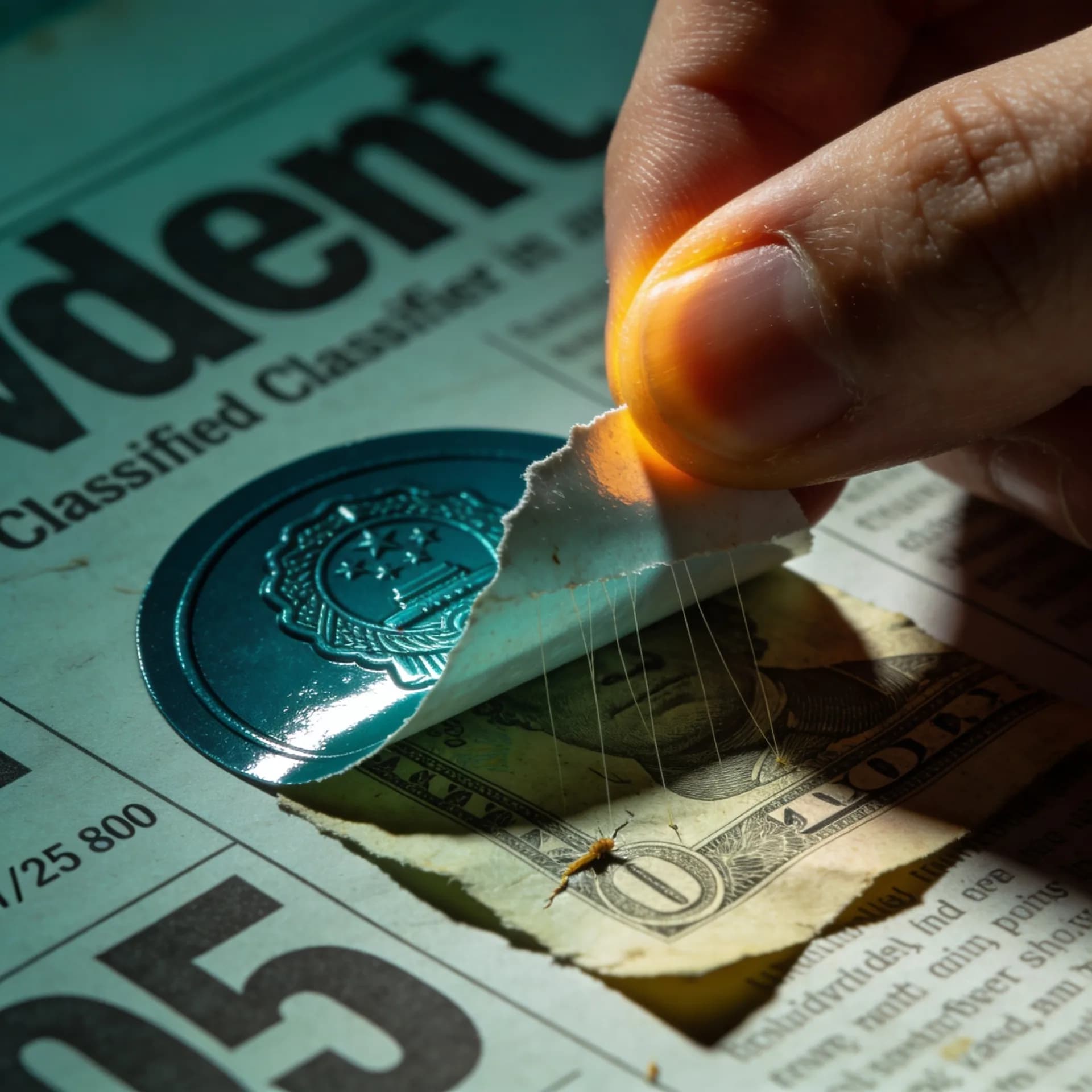
Why "Verified" on SL Ads Often Means Paid, Not Proven — And How to Protect Yourself
Real patterns from paid verification schemes across Sri Lankan classified platforms
Picture this: you spot an ad on an SL Ads site. There's a verified badge right next to it. Then a prompt pops up — Rs.200 to complete what looks like a quick safety check. It's a small amount, the framing makes it feel responsible, so you pay. The badge shows up on the listing within minutes. Everything seems fine. You move on.
What most people don't realise is that on many SL Ads platforms, that badge didn't prove anything. It was purchased. Verification fees typically run between Rs.200 and Rs.500, and not one of these sites publicly explains what, if anything, actually gets checked.
You click "Verified," you pay Rs.200 — then what goes wrong?
It usually starts innocently. You respond to an ad, and the platform nudges you toward a video check. The fee is small enough that it feels worth it for the peace of mind. You pay, the badge appears, and then… nothing. No follow-up from the platform. The person who posted the ad may go completely quiet.
The same pattern plays out across multiple domains: a small fee, a badge, and no audit trail. You lose the money. You lose the time. And if the listing turns out to be cloned or misleading, you've also lost a bit of trust in the whole ecosystem. Platforms keep running this model because they earn from the click itself — there's no accountability built in after that.
Variant 1: The Rs.200 video check deducted from your package
Some platforms bundle video verification as an optional add-on inside a larger package. The fine print says something like "video verification — Rs.200 deducted from package." You buy a bundle, the amount gets pulled automatically, and the badge goes live within minutes.
Nobody watches the video to confirm your identity or check your intentions. The deduction runs through the payment gateway, full stop. Users have reported that once the badge expires, the same account can repost without going through the process again. It's steady, recurring revenue for the platform — but it does nothing to protect the person on the other end of the transaction.
Variant 2: The Rs.500 five-minute video package that "builds trust fast"
Other sites advertise short live sessions — five minutes for Rs.500 is a common price point. You book a slot, do a brief call, and get your badge. The low cost and short duration make it feel routine, almost like a standard onboarding step.
But these calls rarely confirm anything meaningful — not the poster's real identity, not their banking details, not their intentions. At best, you've confirmed that a living person is somewhere on the other end of the line. Meanwhile, accounts can use a few small early transactions to appear trustworthy before making larger, riskier requests. The package model speeds up the appearance of trust without actually creating any.
Variant 3: The cashback-and-verified-badge bait
This one's particularly frustrating. Some listings pair verification badges with cashback offers — something like "verified users get cash back on their first transaction." You pay the fee to unlock the deal. The cashback never arrives.
The badge is the only thing you actually receive. Platforms use the promise of getting money back to push more people through the fee checkout. When the cashback doesn't materialise, there's no clear way to enforce the original offer. You're left holding a paid badge and nothing else.
Why platforms let this happen: monetisation, clone sites, and copy-pasted About pages
If you look closely at several of these platforms, you'll notice something odd — the layouts are almost identical, and the About page text is often word-for-word the same across completely unrelated sites. None of them list a physical address, a company registration number, or a named compliance officer.
Verification fees generate direct income with almost no overhead. When one site attracts complaints, a clone domain can appear almost overnight, and users have no reliable way to trace who's actually running what. Without published verification standards, there's no bar to meet. The incentive is to sell as many badges as possible, not to make the process meaningful.
What police and CERT have said about the broader risk (2025–2026)
Sri Lanka Police reported more than 1,000 foreigners arrested for alleged cybercrime activity in 2026, up from 430 the previous year. CID statements have noted that small initial transfers are commonly used to establish credibility before larger requests are made. In some cases, local bank accounts have been used as money mule channels.
Sri Lanka CERT runs a hotline and a reporting email address, but receives very few complaints specifically about classified ad platforms — largely because no platform publishes a clear escalation path. That gap leaves people without a documented next step when a paid badge turns out to be the lead-up to a scam.
A practical reporting flow: Police, CERT, and your bank
If you've been caught in one of these schemes, move quickly and document everything. Before you do anything else, save the original ad URL, all payment receipts, and screenshots of the verified badge — both before and after the transaction. Record the exact dates and times. Take screenshots directly on the device you used rather than forwarding images, so the metadata stays intact.
Then email [email protected] with the subject line "Classifieds paid verification scam." Include the URL, your payment reference, and a short paragraph describing what was promised versus what actually happened. Call the CERT hotline at 101 and go through the same details. If the amount is above Rs.10,000, also visit your local police station's financial crimes unit and bring everything printed out. Ask for a reference number at every step — you'll need them for follow-up.
See Hela Lanka Ads' posting guidelines for an example of what transparent alternatives look like.
A quick checklist before you respond to any verified listing
Don't pay any verification fee, full stop. Read the About page carefully — it should name real people and list a physical address. Check the domain registration to see who actually owns the site. Confirm the platform has active social media accounts with visible moderation. Test any contact methods listed on the site before engaging with an ad. And walk away from any platform that hides full contact details behind a paywall.
If you've already lost money — here's what to do right now
Call your bank within 24 hours and ask for a chargeback or reversal. Give them the payment reference and the platform URL. Then call CERT at 101 and tell them you paid for a verified badge that was used to set up a fraudulent transaction. Send the same information to [email protected] along with your call reference number.
Go to your nearest police station and file a report under financial fraud. Bring printed screenshots and your bank reference. Get a case number before you leave. If the platform's domain is locally hosted, follow up with CERT about it specifically.
Key Takeaways
- Paid verification badges on SL Ads platforms are often just a revenue mechanism — not a genuine safety check.
- Report every paid badge incident to CERT via the hotline (101) and email ([email protected]), and hold onto your evidence.
- Choose classified platforms that publish real ownership details and let you report issues without needing to log in.
Are SL ads actually effective?
It depends on the platform. Sites that don't publish their verification methods put responders at real risk — paid badges are no substitute for genuine accountability.
Where can I post free ads in Sri Lanka?
Look for platforms that don't charge verification fees and are upfront about who runs them — a real name, a real address, and working contact information on a public page.
What ad categories are most active right now?
Vehicles, property, and services are consistently high-volume. That said, paid verification prompts show up most aggressively in personal and spa listings — worth keeping in mind.
How do I report a scam on a Sri Lankan classifieds site?
Save your screenshots and payment records first. Then email [email protected] and call the CERT hotline at 101. If money was transferred, file a police report with the financial crimes unit.
Frequently Asked Questions
Are personal and spa ads legal on Sri Lankan classified sites?
They exist in a regulatory grey area. No platform currently publishes age or health verification requirements, which means there are no documented safeguards for people responding to those listings.
What types of ads are most common in Sri Lanka?
Vehicle sales, property rentals, and service listings make up the bulk of traffic. Paid verification fees tend to concentrate in the personal service categories.
Which ad categories get the most responses right now?
Short-term rentals and freelance service ads tend to generate strong response rates — but they also attract the highest number of paid badge prompts, so approach with caution.
What is the Sri Lanka CERT hotline number?
It's 101. When you call, have the ad URL and your payment details ready — it makes the report much faster to process.
How can I tell if a classified site is a clone?
Compare the About page wording against other platforms and check who registered the domain. Clone sites almost always reuse identical paragraphs and never list a unique physical address.
Can I get a refund after paying a video verification fee?
Contact your bank immediately and request a chargeback. Provide the platform URL and your payment reference. If the amount is significant, follow up with CERT as well.